
Philips Hue vs LIFX: Which Smart Light Is Right for You?
Philips Hue vs LIFX: Which Smart Light Is Right for You? The world of smart lighting is electrifying, dynamic, and ever-evolving. Amid the glowing galaxy of choices, two luminaries consistently rise to the top: Philips Hue vs LIFX. They are titans in the smart lighting realm, both offering vivid colors, seamless automation, and a spectrum of features designed to elevate living spaces from mundane to magical.
But which one should you crown king of your castle? Whether you’re creating a cozy reading nook, a pulsating party den, or a serene meditation sanctuary, the choice between Philips Hue vs LIFX could influence the very soul of your space.
Let’s dive into a meticulous comparison of their technology, usability, aesthetics, and beyond to illuminate the smarter path forward.
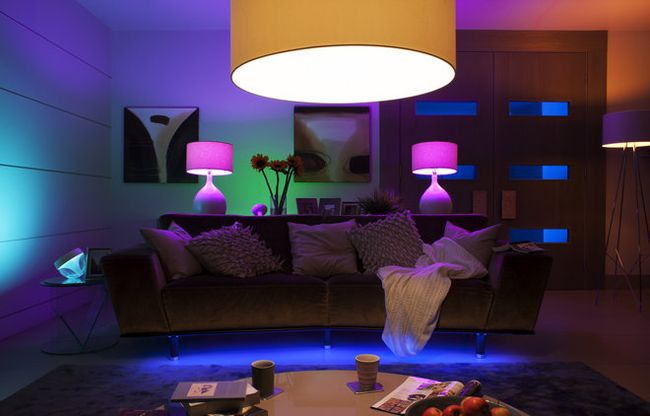
The Origin of Brilliance
Before choosing between Philips Hue vs LIFX, it helps to understand their roots.
Philips Hue, introduced in 2012 by Signify (formerly Philips Lighting), was among the pioneers of the smart bulb movement. With years of refinement, the Hue ecosystem has become synonymous with reliability, integration, and wide-ranging accessories. It’s a veteran in the game, and it shows.
LIFX, an Australian-born startup launched via Kickstarter in 2012, made waves with its Wi-Fi-connected bulbs and intense brightness. It has built a reputation for cutting-edge color technology and a hub-free experience that appeals to tech-savvy users and design aficionados alike.
Both brands are veterans in their own right, but they each cater to slightly different lighting personas.
Connectivity and Hubs: Centralized vs Independent
One of the first forks in the road when considering Philips Hue vs LIFX lies in connectivity.
Philips Hue typically requires a bridge (hub) for optimal performance. This bridge connects your bulbs to the router and unlocks advanced features such as out-of-home control, complex automation, and integration with Zigbee-based devices. Newer Hue products can also connect via Bluetooth, but the experience is more limited.
In contrast, LIFX operates purely on Wi-Fi. No hubs, no bridges—just screw in the bulb, connect it via the app, and you’re in business. For minimalist smart home setups or renters who want a plug-and-play experience, this simplicity is irresistible.
Still, it’s worth noting that Hue’s bridge offers remarkable scalability and resilience in larger setups. For dozens of lights, automation, and integration with broader smart ecosystems, it performs with military-grade dependability.
Winner for Convenience: LIFX
Winner for Scalability: Philips Hue
Brightness and Color Brilliance
Lighting isn’t just about visibility—it’s about vibrancy, ambiance, and chromatic charisma. In the battle of Philips Hue vs LIFX, brightness and color accuracy are vital.
LIFX bulbs shine—literally—with some of the brightest outputs in the consumer smart lighting market. Many LIFX models exceed 1,100 lumens, offering searing whites and deep, saturated colors. Their color range is staggeringly diverse, with subtle shifts that even seasoned designers appreciate.
Philips Hue delivers slightly less lumens on average—typically around 800 to 1,100 lumens depending on the bulb. However, where Hue triumphs is in the smoothness of transitions, the warmth of whites, and the refined tuning of its color palette. The lights don’t just change—they glide.
In practice, LIFX lights can sometimes overwhelm smaller rooms with their brilliance, while Hue lights create a softer, more immersive aura.
Winner for Brightness: LIFX
Winner for Subtlety: Philips Hue
App and Interface Experience
The smart light app is your control panel, your canvas, your wand. Comparing the apps of Philips Hue vs LIFX is essential.
The Philips Hue app is elegant, intuitive, and updated frequently. Users can group lights by room, set routines, create scenes, and integrate accessories like motion sensors or dimmer switches. The automation engine is top-notch, offering sunrise routines, geofencing, timers, and even dynamic scenes.
LIFX’s app is visually rich and feature-packed. It offers granular control over color zones (lights split into multiple sections), themes, effects like candle flicker or strobe, and powerful scheduling tools. Its interface leans slightly more toward power users, which can be thrilling or overwhelming depending on your style.
While both are top-tier, the Hue app’s sheer polish and hardware synergy give it a slight edge for the average user.
Winner for Power Users: LIFX
Winner for Seamless Control: Philips Hue
Ecosystem and Accessories
If smart lighting is a symphony, then accessories are the instruments. Let’s examine how Philips Hue vs LIFX build their orchestras.
Philips Hue boasts an extensive ecosystem: light strips, lamps, ceiling fixtures, outdoor lights, motion sensors, dimmer switches, and even HDMI sync boxes for entertainment lighting. It’s an ecosystem designed for total home immersion.
LIFX has a more streamlined offering—bulbs, light strips, candles, and beams—but it lacks the same breadth of accessories and hardware integration as Hue.
This difference becomes significant when building a full-home setup or integrating with other smart devices.
Winner for Ecosystem Variety: Philips Hue
Integration with Smart Home Systems
The measure of a true smart light is its compatibility with your wider digital life.
Philips Hue integrates seamlessly with Amazon Alexa, Google Assistant, Apple HomeKit, Samsung SmartThings, IFTTT, and more. Its Zigbee foundation means it can also work with a broader array of smart devices like thermostats and door locks. It’s the diplomat of smart lighting—getting along with everyone.
LIFX is also very capable in this regard. It works beautifully with Alexa, Google Assistant, and HomeKit, and it has a robust IFTTT presence. However, its lack of Zigbee support may limit some advanced automations and device interactions.
Winner for Broad Compatibility: Philips Hue
Reliability and Firmware Stability
The most dazzling light in the world means little if it fails when you need it. When assessing Philips Hue vs LIFX, reliability is paramount.
Philips Hue is celebrated for its rock-solid stability. Firmware updates are timely, devices rarely drop connection (especially with the bridge), and lights just work—day after day, night after night.
LIFX offers excellent performance most of the time, but because it relies solely on Wi-Fi, it can occasionally suffer from connection hiccups—especially in homes with crowded networks. Firmware updates, while rich in features, have sometimes introduced bugs or quirks in the past.
Winner for Reliability: Philips Hue
Design Aesthetics
Light is art. But so is the bulb that delivers it.
Philips Hue lights tend to look like standard bulbs. Subtle, sleek, but not show-stoppers. The new Hue Gradient series and Lightstrip Plus, however, add a touch of drama.
LIFX goes bolder. Their lights often look futuristic, geometric, and intentionally designed to be noticed. Their Beam and Tile products double as wall art—lighting that becomes an architectural feature.
If visual intrigue is your goal, LIFX offers more flair. If discretion and elegance are preferred, Hue delivers classic charm.
Winner for Visual Design: LIFX
Customization and Scene Creation
This is where the magic happens.
LIFX offers rich, powerful customization. Zone control lets you assign different colors to segments within a single bulb or strip. Effects like “Spooky” or “Color Cycle” create immersive experiences. LIFX encourages creative experimentation.
Philips Hue provides pre-set scenes based on real-world locations (like “Arctic Aurora” or “Savanna Sunset”) and dynamic scenes that slowly change over time. While slightly less granular than LIFX, the experience feels more natural, refined, and immersive.
Winner for Artistic Control: LIFX
Winner for Natural Atmosphere: Philips Hue
Energy Efficiency and Longevity
Both brands employ LED technology, which is inherently energy-efficient. But are there nuances in the Philips Hue vs LIFX debate?
Philips Hue bulbs are known for longevity—often rated for 25,000 hours or more. Because they connect through a bridge, they can use less Wi-Fi bandwidth and slightly less power in standby mode.
LIFX bulbs are also LED-based and offer comparable lifespans. However, due to Wi-Fi connectivity, their idle power consumption may be marginally higher.
In everyday use, this difference is negligible—but in energy-conscious homes, it may be a consideration.
Winner for Slight Efficiency Edge: Philips Hue
Price and Value Proposition
Smart lighting isn’t just about cost—it’s about value. Still, pricing plays a crucial role when comparing Philips Hue vs LIFX.
Philips Hue bulbs typically cost between $40–$60, and you’ll need to invest in the $50 bridge for full features. However, starter kits often bundle the bridge with bulbs at a discount.
LIFX bulbs range from $40–$70, with no hub required. While individual bulbs can be more expensive, there’s less overhead for beginners.
For small setups, LIFX might be more affordable. For whole-home installations, Philips Hue becomes more cost-effective and scalable over time.
Winner for Entry-Level Simplicity: LIFX
Winner for Long-Term Value: Philips Hue
Use Case Scenarios: What’s Right for You?
Still torn between Philips Hue vs LIFX? Consider your environment and goals.
- For designers and creatives who crave vibrancy, custom scenes, and dramatic installations: LIFX is your muse.
- For families and automation enthusiasts who want smooth routines, dependable control, and device harmony: Philips Hue is your partner.
- For renters or those starting out: LIFX provides quick wins and gorgeous light without extra equipment.
- For tech integrators and smart home aficionados: Philips Hue offers deeper integration and a robust ecosystem.
Final Verdict: A Brilliant Dilemma
The face-off between Philips Hue vs LIFX is not about one being categorically better than the other. It’s about alignment—of vision, of lifestyle, of priorities.
Philips Hue brings a curated, dependable, and ecosystem-rich experience that integrates beautifully with broader smart home ambitions. It’s the Tesla of lighting—sophisticated, smart, and forward-thinking.
LIFX, in contrast, offers artistic firepower, radiant brilliance, and playful customizability without the need for a centralized hub. It’s the avant-garde innovator—unapologetically bold and full of personality.
No matter your choice, both brands offer world-class illumination that transcends function and flirts with wonder.
In the end, the smartest light isn’t just the brightest.
It’s the one that fits your world just right.


